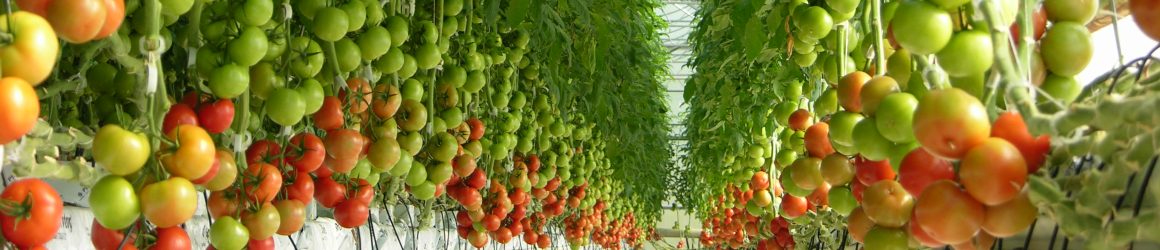
Authors: Greg Fougere (MSc graduate, Brock University), Jonathan Griffiths (Research Scientist – Virology, Agriculture and Agri-Food Canada) and Cara McCreary (Greenhouse Vegetable IPM Specialist, OMAFA)
Part 1 explained how we suspect ToBRFV was entering into Canada and moving between greenhouses (access post here). Here we will explore mutations, adaptations and how the virus is responding to the protection offered by genetic host resistance.
Before we go any further, let’s explain what these terms mean.
Mutation: random change in the viral genome that occurs when the virus replicates inside a host plant. Plant viruses with RNA genomes (like ToBRFV) are especially prone to mutations.
Adaptation: heritable trait that becomes common in a virus population because it improves survival or transmission in a specific environment.
Adaptation occurs through natural selection acting on mutations. This can happen over multiple infection cycles.
Below you will find details to assist with identifying some key mirid species. The focus is distinguishing between Dicyphus hesperus, a beneficial mirid, and Nesidiocoris tenuis, a pest mirid. This material was presented in the Tools of the Trade Workshop at the 2025 Canadian Greenhouse Conference.
These PDF’s can be downloaded and used as reference material. They can be printed on letter size paper.
This spreadsheet is available to download and edit with your own notes. It was last updated 09-July-2025. The spreadsheet may not be an exhaustive list and is meant to summarize a variety of products and list relevant research results. It will be updated periodically.
Authors: Greg Fougere (MSc candidate, Brock University), Jonathan Griffiths (Research Scientist – Virology, Agriculture and Agri-Food Canada) and Cara McCreary (Greenhouse Vegetable IPM Specialist, OMAFA)
For several years now tomato brown rugose fruit virus (ToBRFV) has reared its ugly tomato head in Canadian greenhouses and across the world (Zhang et al., 2022). The greenhouse sector and all its allies including greenhouse employees, grower organizations, suppliers and researchers have worked diligently to understand mitigation and management. Biosecurity has improved. Detection has improved. Seed suppliers have developed ToBRFV-resistant cultivars at a rapid pace. But we are not out of the woods quite yet.
Written by Caio Correa, Pathologist – Horticulture (A), OMAFA with input from Cara McCreary, Greenhouse Vegetable IPM Specialist, OMAFA
As greenhouse growers become more proactive in testing their plants for pathogens, more virus detections are showing up in the reports. This can be concerning, especially after seeing devastating outbreaks of Tomato Brown Rugose Fruit Virus (ToBRFV) in the last few years, which caused 70% crop losses in some greenhouses.
Not every virus infection will necessarily lead to a major outbreak like ToBRFV, but knowing which ones are circulating in the crops and how they spread can help prevent economic losses.
Insect-vectored viruses are among the most common in greenhouses. Some of these viruses and their vectors are listed below:
But a particular virus seems to be showing up more frequently in greenhouses, specifically in cucumbers: the Tobacco Streak Virus (TSV). Ontario growers haven’t reported any notable losses yet, but there is a history of major outbreaks in other crops and countries.
Outbreaks in India in the early 2000s resulted in 30-75% of crop losses in field cucumbers, and over $65 million in economic losses in groundnut. More recently, in 2013, TSV was reported in soybean fields in both the USA and Ontario.
What is Tobacco Streak Virus (TSV)?
Tobacco Streak Virus (TSV) is a plant pathogenic virus of the family Bromoviridae. It was originally identified in tobacco, but it can infect over 200 plant species. Among crops, cucurbits, legumes, oil seeds, cotton and cranberries are listed as common hosts, but it can probably infect any greenhouse crop.
How does TSV spread?
TSV can be transmitted through seed and mechanical damage, but it is primarily spread by the movement of infected pollen by thrips. Weeds are also involved in the cycle, both a host for the virus as well as a reservoir for thrips. Though TSV has not been studied in greenhouses, it is safe to assume that the movement of workers, machinery and plant material could also transmit infected pollen and spread the disease.
And one strange observation we’ve made in recent years, are populations of the bean leaf beetle (Cerotoma trifurcata) that appeared in a cucumber greenhouse that happened to have plants infected with TSV. Why is this so strange, you ask? Because bean leaf beetles are commonly found feeding on legumes (like soybeans) not cucurbits (like cucumbers)! Bean leaf beetles are also known to vector viruses within soybean crops, such as the bean pod mottle virus (BPMV). With all this, it’s probably safe to ask this question: could bean leaf beetles be vectoring TSV?
Side note: Look for signs of defoliation of the leaves (similar to looper damage), take a look at your sticky cards and inspect the plants for small beetles with the following adult features:
Up to 5 mm in length
Varies in colour from deep red to pale yellow or tan
May have from 0 to 6 spots on elytra (hard hind-wings)
Inverted black triangle behind the scutellum (looks like their neck) (Fig. 1)
Fig. 1. Bean leaf beetle colour and spot variations. Top row photo credit: Cara McCreary. Bottom row photo credit: Dave Cheung.
Symptoms and Diagnosis
Symptoms of TSV may vary depending on the host. The virus gained its name after the necrotic dark streaks on the veins of infected plants, but other symptoms include leaf chlorosis, stunted growth, deformed shoots, leaf mosaic and lodging.
In cucumbers,infected plants showed leaf curling and wrinkling, with a somewhat blistered and distorted look. Some streaks and patterns of chlorosis (yellowing) were also observed (Fig. 2).
Fig. 2. Cucumber leaves with confirmed infection by Tobacco Streak Virus from a greenhouse in Ontario. Photo by Dr. Geneviève Marchand (Greenhouse Pathologist, AAFC Harrow).
However, these symptoms alone are not enough for a diagnosis, as they may also be caused by other viruses and pathogens. Accurate virus identification can only be done though molecular assays in a diagnostic lab or sometimes with on-farm tools like immunoassay strip tests when available.
Monitoring and Prevention
Infections by plant viruses cannot be treated, and the best management strategy is to prevent their spread through early detection, cultural practices, and controlling insect populations.
Following an integrated pest management (IPM) protocol will help not only with viral diseases, but also with other pests. Those include:
Regular monitoring and testing for viruses and using sticky traps to surveil for insect populations, particularly thrips in the case of TSV
Implementing crop rotation and maintaining optimal plant nutrition levels
Removing and properly disposing of infected plants
Using biological control agents to manage thrips and other insect pests
Applying insecticides at label-rates and rotating modes of action to prevent resistance in thrips populations.
Maintaining strict sanitation practices, including disinfecting tools and equipment
If you suspect viral infections in your greenhouse crops, consider submitting samples for testing or reach out to the OMAFA specialists (and feel free to let us know if you find bean leaf beetles in your crop too!):
Department for Environment, Food & Rural Affairs (DEFRA), 2024. Tomato Brown Rugose Fruit Virus (ToBRFV) Factsheet.
Irizarry, M.D., Kleczewski, N.M., Babu, B. and Jain, R., 2016. Re-emergence of Tobacco streak virus infecting soybean in the United States and Canada. Plant Health Progress, 17(2), pp.92-94.
Krishnareddy, M., Bhat, A.I., Kiran Kumar, M. and Govindappa, M.R., 2003. Outbreak of Tobacco streak virus causing necrosis of cucumber (Cucumis sativus) and gherkin (Cucumis anguria) in India. Plant Disease, 87(10), p.1264.
Kumar, P.L., Muniyappa, V., Jones, A.T., Reddy, D.V.R., 2008. Emergence and spread of Tobacco streak virus menace in India and control strategies. Indian Journal of Plant Protection, 36(1), pp.1-8.
McCreary, C. M., Smith, J. L., Bahlai, C. A., Schaafsma, A. W., & Hallett, R. H. 2022. Phenology of Bean Leaf Beetle (Coleoptera: Chrysomelidae) in Ontario, Canada and Field Validation of a Degree-Day Model. Environmental Entomology, 51(1), 252-262.
Ontario Ministry of Agriculture, Food and Agribusiness (OMAFA), 2025. Publication 836A: Integrated Pest Management for Greenhouse Fruits and Vegetables.
If you are local to southwestern Ontario and itching to get out and mingle with the greenhouse sector and their allies, you won’t want to miss the Leamington Greenhouse Grower Expo (LGGE)! After a successful inaugural event in 2024, this years event is equipped with a big lineup of exhibitors and speakers. And as an added bonus, they’ve added a Biocontrol Workshop the day before but space is limited for the workshop so you’d need to secure a spot ASAP. Registration is open for both days. See details below.
Spotted lanternfly (SLF) is an invasive sap-feeding planthopper with potential to harm agriculture and forestry in Ontario.
But I only grow greenhouse fruits and vegetables, so why does it matter to me, you ask? Although not considered a huge threat to our greenhouse crops, we can still do our part in our communities. If you enjoy the benefits of orchards, vineyards, agroforestry or ornamental nurseries or you have neighbours, friends or family that produce these commodities, then you are part of this community.
Spotted lanternfly is a quarantine pest in Canada. It is important to report any sightings immediately to the Canadian Food Inspection Agency.
Steps to take if you suspect SLF:
Take a photo or video
Collect specimens including adults, nymphs or egg masses
Tip: To assist with early detections, pay close attention to any tree-of-heaven‘s that you have on or near your properties since these are preferred hosts for SLF.
Below are some resources that can be used to spread awareness including:
In 2024, a series of hands-on workshops was run to help growers and IPM staff learn how to identify thrips to species. This workshop series was developed and delivered by the Vineland Research and Innovation Centre (Dr. Rose Buitenhuis, Ashely Summerfield), Ontario Ministry of Agriculture, Food and Agribusiness (OMAFA) (Dr. Sarah Jandricic, Cara McCreary), and Agriculture and Agri-Food Canada (AAFC) (Dr. Rose Labbé).