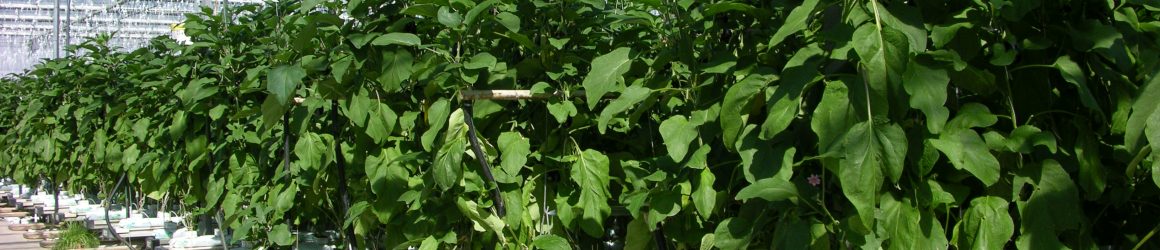

As we approach the end of the 2022 crop cycle for many greenhouse vegetable and fruit crops, there is an opportunity to start anew. Get out your brooms, power washers and scrub brushes! And dive into a critical component of integrated pest management (IPM): conducting a thorough clean out between crops. This cultural management tool reduces carryover of arthropod pests and plant pathogens, improving the success of IPM programs in your next crop.
Continuous production is no longer the norm for our common greenhouse crops, but there may be cases where it seems unavoidable. For example, in a greenhouse that has a traditional crop cycle (i.e. summer production) and a winter crop under artificial lights. Or large greenhouses, where clean out and planting efforts are managed in sections. Vertical farms and some indoor production facilities may also be set up for continuous production. In these cases, efforts can still be made to compartmentalize to minimize contamination between rooms, sections or greenhouses. Many of the strategies mentioned below can still be useful in these situations.
Let’s dive into some tips, tricks and checklists.
Basic (but critical) steps to cleaning:
- Remove organic matter (OM): Why?
Because OM protects pests (including pathogens) and can neutralize/inactivate disinfectants.
2. Wash with detergent, then rinse, and allow to dry: Why?
Because washing/scrubbing with detergent first can eliminate more OM and begins to break down pathogens.
3. Disinfect, then rinse, and allow to dry: Why?
Because this final step can catch what was missed in steps 1 and 2.
Tips to keep in mind during clean out
Maintain warm temperatures
When temperatures fall close to 0°C, many arthropods think it’s naptime. These temperatures are NOT low enough to freeze them. And they can take REALLY long naps at this temperature. But if you maintain warm temperatures and do not provide them with food (e.g., your crop) and water, they will stay active and most will starve fairly quickly. Of course recognizing there is a significant cost associated with maintaining warm temperatures in early winter, this cost can be weighed against the significance of your pest populations at the end of your previous crop and the costs associated with managing them early in your next crop.
Warmer temperatures also increase the effectiveness and efficiency of disinfectants. If temperatures are too low, disinfection may take longer or not work at all. Label rates of disinfectants are often not intended to be used at low temperatures. For example, 20°C is generally accepted as a suitable temperature for disinfectant performance, but there can be a substantial reduction in efficacy at 10°C and it may not be effective at all at 0°C.
Monitor for residual pests
Some pests will hide in crevices waiting for a new food source (especially when temperatures are low) and as soon as you put your new crop in and throw the heat on, they are ready for a feast. You can use sticky cards, sticky tape or pheromone-baited traps during and right after clean out to see if there are any hiding in wait. Another interesting approach is to use trap plants to draw them out of hiding before planting your new crop. For example, if pepper weevil is a concern, in a heated greenhouse, put several pepper plants near a previous hot spot. Add a pheromone-baited sticky trap to that area and monitor both the plants and the pheromone trap for signs of pepper weevil. If you find those evil weevils, you’ll have an opportunity to get rid of them before planting.
Maintain sanitation and hygiene
Throughout the clean out period, it is important to minimize reintroductions of potential pests and be mindful of sources of inoculum. Continue to use footbaths, hand sanitizer, wear freshly laundered clothes and clean footwear, etc. Soil tracked in on the bottom of shoes can contain thousands of spores of Fusarium. After all, we don’t throw crumbs on our plates while we are washing them!
Heat and vent
Heating and venting the greenhouse is especially important if pesticides or disinfectants were used during clean out that leave residues that are phytotoxic to your crop. Your young plants at planting may be extra susceptible.
Clean out Checklist
CROP DISPOSAL
- Treat crop before removal to kill active pests
- Remove and properly dispose of:
- Old crop (do not pile or spread infected plant material behind your greenhouse)
- Other materials (clips, slabs, strings, etc.)
- Remove remaining plant residues:
- Sweep, vacuum and shred residues focusing on gaps in floor covering, walkways, corners, ledges, etc.

CLEAN IRRIGATION SYSTEM
- Remove drippers from media
- Keep lines slightly charged to maintain moisture
- Disconnect pH and EC sensors
- Remove filters
- Flush lines:
- Flush with water
- Flush with acid (e.g. nitric acid, sulfuric acid, hydrochloric/muriatic acid); check the emitter manufacturer for pH requirements
- Pulse several times at 1-hour intervals for 24 hours
- Flush with clean water
- Flush with disinfectant
- Flush again with clean water when specified by the product label
- Clean and disinfect:
- Stock tanks
- Return/dirty leach tanks
- Freshwater tanks
- Pump sets
- Emitters stakes (soak in acid solution for up to 48 hours, rinse well, disinfect, rinse well when specified by the product label)
- Replace emitters and other parts when necessary
WASHING AND DISINFECTING
When washing and disinfecting different parts of the greenhouse, be sure to let soak (wet) for a minimum of 15 minutes (sometimes 60 minutes or more is better depending on the product recommendations and your target organism: viruses = longer). Longer contact time is generally more effective though be mindful of corrosiveness of disinfectants. Rinse well with water and let dry completely between steps. DO NOT FORGET the door handles, keyboards and other surfaces touched by employees!


Wash and disinfect structure:
- Use a power washer or some specialized equipment on low pressure with large opening tip
- Start at the point of the roof and work down
- Replace old floor covering when necessary

Wash and disinfect all horizontal surfaces, including but not limited to:
- Rafters
- Pipes
- Troughs
- Concrete walkways
Wash and disinfect all tools and equipment, including but not limited to:
- Scissor carts
- Picking crates
- Wires
- Machinery
- Vehicles
- Fork lifts (including forks and steering wheels)
- Pallets
- Knives and scissors
Wash and disinfect other common areas, including but not limited to:
- Offices
- Washrooms
- Lunch rooms
- Packing lines
- Boiler room
Gone through the checklist above? Do you feel ready for a fresh start?
Disclaimer: Always check federal, provincial and municipal regulations when choosing pesticides and disinfectants. It is critical to store, handle, apply and dispose in a proper manner to avoid or eliminate negative impacts on personal health and safety and the environment. Always check safety data sheets (SDS) recommendations before using any product. Check warning labels for required personal protective equipment (PPE).